The attack ad in your feed may not be real. The Wesleyan Media Project has counted at least 220 ads in the 2026 midterms that were made or enhanced with AI, with more than $137 million behind them, and only 27 percent of them carry any disclaimer. There is no federal rule. Thirty states have their own, and they run until the polls close on Tuesday, November 3. Here is how to check an ad in under a minute, what the law says where you live, and exactly where to report one.

Watch · 2 minutes
Before you vote: three ways to spot an AI attack ad
The short version, on camera. Look for the label. Find the original. File where your state allows. The rest of this page is the detail behind each step, with the law for every state that has one.
Share it with the person in your family who forwards political videos.
The short version
- Using AI in a political ad is legal. What 30 states regulate is fake media that makes a real person, usually a candidate, appear to say or do something they never did.
- Most of those states want a label, not a ban. In 27 of them a clear AI disclosure makes the ad legal, usually inside a window of 60 or 90 days before the election. Maryland, Minnesota and Texas ban certain election deepfakes outright.
- No label does not mean it is real. Only about one in four AI ads tracked this cycle carried any disclaimer.
- Reporting works in some states and not others. In about a quarter of them the only real remedy is a lawsuit by the candidate who was faked. Your state's entry below says which.
How to spot an AI political ad in three checks
You do not need software or a trained eye. You need about a minute and a little suspicion, especially for any ad that makes you angry fast.
-
Look for the label
Where a state requires one, it is short text on the screen or a line read at the start and end of an audio ad. Some states want it on screen for the whole video; Florida, Maine and Montana set the minimum size at 4 percent of the picture height, which is small on a phone. It will not say "deepfake." It reads more like these, taken from the statutes:
- "Created in whole or in part with the use of generative artificial intelligence (AI)." Florida
- "This video content generated by AI." Wisconsin and Utah
- "This image has been manipulated." Nevada, New York and Washington
- "Ad generated or substantially altered using artificial intelligence." California
The Senate Republicans' March 2026 deepfake of Texas Senate candidate James Talarico had a label. It was faint, in the bottom right corner. A label is easy to miss on a phone, so pause the ad and look.
-
Find the original
If a candidate seems to say or do something wild, go find it from a second source before you believe it or share it. Check the candidate's own channels, then coverage from a news outlet you know. A real moment that big will be everywhere. A fake usually lives only in the ad.
Then check who paid. Every ad on Facebook and Instagram is searchable in the Meta Ad Library, and Google and YouTube ads are in the Google Ads Transparency Center. Both show the sponsor, and Meta shows the spend. The "paid for by" line on the ad itself tells you who is responsible for it.
-
File where your state allows
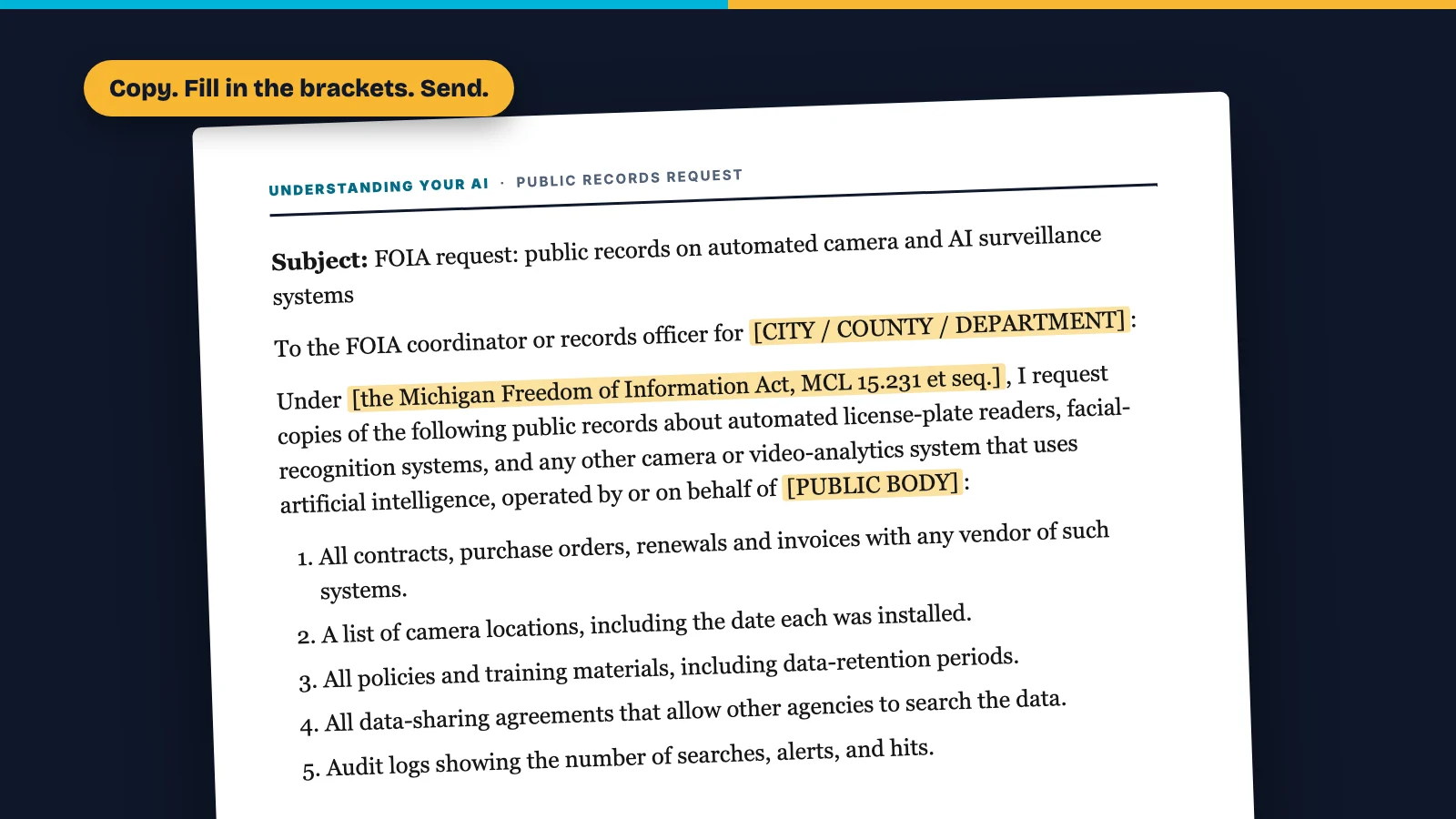
This is the step almost nobody takes. Every state with a law names who enforces it, and most have a complaint form. Save the evidence first (the checklist is below), then find your state in the state-by-state section for the official link.
What no longer works: squinting at hands, teeth, earrings or blinking. The 2026 tools fixed most of those tells. Where the ad came from and who paid for it will tell you more than the pixels will. And the reverse is true too: a label does not mean the claim in the ad is false, only that the picture or voice was made or changed with AI.
How much AI is in this year's political ads
The Wesleyan Media Project, which has tracked political advertising since 2010, released its latest count on October 15, 2026, covering ads through October 11:
In the whole 2024 cycle, Wesleyan found less than $50,000 spent on AI-generated ads. By its count, 81 percent of this year's AI ads were sponsored by Republican candidates or groups and 12 percent by Democrats. Wesleyan calls its total "almost certainly an undercount," because AI use is hard to detect when nobody discloses it.
Four AI ads from this cycle, and what happened next
| Ad | Labeled? | What happened |
|---|---|---|
| National Republican Senatorial Committee, deepfake of Democrat James Talarico (Texas Senate), March 2026 | Yes, faint, bottom right | An 85-second ad with a fake Talarico reading his real posts plus commentary he never said. Legal where labeled; it shows how small a compliant label can be. |
| Bruce Blakeman for New York, AI video of Gov. Kathy Hochul and Mayor Zohran Mamdani selling a "political delusion pill," September 2026 | No AI label | The New York State Democratic Party filed a Board of Elections complaint over Blakeman's unlabeled AI ads. His campaign has described at least one of them as satire. |
| Democrat Scott Colom, AI video of Sen. Cindy Hyde-Smith (Mississippi Senate), October 2026 | No | On October 23 the Mississippi Attorney General wrote that the ad appeared to violate the state's deepfake law and asked for it to come down by 3 p.m. that day. The campaign deleted it. |
| A congressional campaign graphic in western Wisconsin, October 2026 | No | Cassandra Butzler of Eau Claire filed an ethics complaint on October 22 under Wisconsin's AI label law. The campaign says the image is a newscast screenshot, not AI, and calls the complaint a stunt. Still pending. |
What the state laws actually say
Thirty states now have an enforceable law aimed at AI-generated or digitally faked content in election ads. Before 2024 only five did. Texas went first in 2019, and the big wave came in 2024, the first presidential cycle with cheap voice cloning and generative video. They fall into three groups:
- Disclosure 26 states. Deceptive AI media is legal if it carries the required label. A handful, including Michigan, Utah, Wisconsin, North Dakota and Indiana, require a label on qualifying AI content regardless of intent.
- Prohibition 3 states. Maryland, Minnesota and Texas ban certain election deepfakes outright. A label does not make them legal.
- Prohibition plus disclosure 1 state. California requires an AI label on committee ads and separately bars certain deceptive deepfakes close to an election.
Enforcement is the weak spot. In about a quarter of these states, including Idaho, Indiana, Kentucky, New York, Rhode Island, Utah and Washington, the main remedy is a lawsuit by the candidate who was faked, not a complaint to an agency. Where an agency does enforce, it is usually the Secretary of State, an ethics or campaign finance commission, or a prosecutor.
What enforcement looks like so far
The 2026 midterms are the first real test, and the early cases show how uneven it is. Mississippi's Attorney General got an unlabeled Senate ad taken down in a day. In Colorado, a state senator's complaint over an undisclosed AI video tied to a ballot measure was headed to an administrative hearing in October. California's Fair Political Practices Commission sent a warning letter in September to a statewide campaign whose video on X lacked the AI disclosure. In Tennessee, a campaign for governor used a cease-and-desist letter to get an unlabeled AI ad pulled by two cable carriers.
The courts are pushing back too. A federal judge blocked Montana's law for the groups that challenged it in September 2026. Hawaii's law was struck down in January 2026, and California's broadest deepfake ban was struck down in 2025. Satire is where most of these challenges land.
Why you will see 30, 31 and 33
Trackers disagree on the count because they define it differently. This guide counts the 30 states with an enforceable election AI law. Public Citizen's tracker lists 33 with an enacted bill, but that includes Hawaii (struck down), Massachusetts (a 2024 provision repealed before it ever applied) and Pennsylvania (a 2025 digital forgery law aimed at scams, not elections). Drop Hawaii and Massachusetts and you get the 31 that Public Citizen and the National Conference of State Legislatures cited in mid 2026. Drop Pennsylvania and you get 30.
Before you report an AI political ad
Agencies act on evidence, and online ads disappear fast. Capture these before you file:
- A screenshot or screen recording of the ad, plus the link to where you saw it. Save a copy through the Wayback Machine if you can.
- The date and time you saw it, and the platform, station or mailer it came through.
- The "paid for by" line or sponsor name, word for word. That line usually decides which agency has jurisdiction.
- Which election it relates to and the election date, since most rules only apply inside a window.
- For Facebook, Instagram or Google ads, the ad library entry, which shows the sponsor and spend.
Many state complaint forms must be signed, sworn or notarized, and several do not accept anonymous complaints. Your state's entry says which.
AI political ad laws, state by state
All 30 states with an enforceable law, current as of October 29, 2026. Pick your state to jump to its full entry: the law, the plain-language rule, the required label wording where the statute spells it out, penalties, court status, who enforces it and the official place to report.
Michigan voters: any paid ad about a Michigan candidate, election or ballot question that uses AI-generated image, audio or video has to say so, at any time. Report a missing label to the Bureau of Elections at BOERegulatory@michigan.gov. One catch: the Bureau said in June 2026 that this rule does not reach candidates for federal office, so a deepfake in a U.S. House or Senate race goes to the Attorney General under the separate deceptive media law. Full Michigan entry.
AlabamaDisclosure90 days before
HB 172, Act 2024-349 (2024) · Ala. Code 17-5-16.1
- What it requires
- It is a crime to knowingly distribute "materially deceptive media" (AI or technically manipulated image, audio, or video falsely showing a person saying or doing something) intending to harm a candidate and deceive voters. A compliant disclaimer is a safe harbor.
- When it applies
- 90 days before an election
- Required label
- Suggested wording the statute deems sufficient: "This media has been manipulated by technical means and depicts speech or conduct that did not occur." Shown throughout video; read at start and end of audio.
- Penalties
- First offense Class A misdemeanor (up to 1 year). Repeat within 5 years is a Class D felony.
- Candidate can sue
- Yes (injunction only)
- Court status
- No challenge found. The AG stated in 2024 that obvious parody is outside the law.
- Who enforces
- Alabama Attorney General and local district attorneys. The Secretary of State takes reports and forwards them to the AG, local law enforcement, and the Ethics Commission.
- Report it
SOS fraud line 1-800-274-VOTE. AG (334) 242-7300. Ethics Commission (334) 242-2997.
- Read the law
- Ala. Code 17-5-16.1
- Worth knowing
- Exempts satire or parody that relies on a human impersonator rather than AI, and bona fide news coverage.
ArizonaDisclosure90 days before
SB 1359 and HB 2394 (2024) · A.R.S. 16-1024 (disclosure); A.R.S. 16-1023 (digital impersonation lawsuits)
- What it requires
- A creator may not distribute synthetic media of a candidate on the ballot that the creator knows is a deceptive deepfake unless it carries a clear and conspicuous AI disclosure. A separate statute lets candidates and citizens sue over undisclosed digital impersonations at any time.
- When it applies
- 90 days before an election (16-1024); anytime (16-1023)
- Required label
- No fixed wording. Must be "clear and conspicuous" and tell a reasonable person the media includes AI-generated content.
- Penalties
- Civil per-day penalty for each day the deepfake runs undisclosed (16-1024). Declaratory relief for candidates under 16-1023.
- Candidate can sue
- Yes (declaratory relief under 16-1023)
- Court status
- No constitutional challenge found. Chaplik v. Conservatives for Effective Government (filed July 2026) is the first private suit under both sections; no ruling found.
- Who enforces
- Arizona Attorney General for state offices and statewide measures; county, city, or town attorneys for local races.
- Report it
AG (602) 542-5025. Complaints must be signed and based on first-hand knowledge. SOS election line 1-877-THE-VOTE.
- Read the law
- A.R.S. 16-1024 (disclosure); A.R.S. 16-1023 (digital impersonation lawsuits)
- Worth knowing
- Exempts satire and parody. SB 1295 (2025) separately makes criminal impersonation by AI voice a class 5 felony.
CaliforniaProhibition plus disclosureAnytime (AI label); 30 to 60 days (deepfakes)
AB 730 (2019), AB 972 (2022), AB 2355 (2024), AB 2839 and AB 2655 (2024, enjoined), AB 502 (2026) · Gov. Code 84514 (AI ad disclosure); Elec. Code 20010 and 20012 (deceptive media)
- What it requires
- Committee ads with any image, audio, or video generated or substantially altered by AI must carry a fixed AI disclosure, with no intent element (AB 2355). Separately, knowingly distributing materially deceptive media of a candidate with malice is barred unless labeled (20010), and AB 502 now bars deceptive AI content of candidates, election officials, or voting equipment close to an election, where a label does not cure a deepfake of someone else.
- When it applies
- AI ad disclosure: anytime. 20010: 60 days before. 20012 (AB 502): 30 days before for candidates; 30 days before through 38 days after for election officials and equipment.
- Required label
- AB 2355: "Ad generated or substantially altered using artificial intelligence." 20010: "This _____ has been manipulated." (image, video, or audio).
- Penalties
- AB 2355: FPPC administrative or civil remedies, not a misdemeanor. 20010 and 20012: civil injunction and damages only.
- Candidate can sue
- Yes (under 20010 and 20012)
- Court status
- AB 2839 struck down and AB 2655 enjoined in Kohls v. Bonta (E.D. Cal., Aug 2025); appeal pending at the Ninth Circuit. AB 502 (effective Sept 19, 2026) not yet challenged.
- Who enforces
- Fair Political Practices Commission for the AI ad disclosure. Private lawsuits for deceptive media.
- Report it
FPPC 1-866-ASK-FPPC (866-275-3772); accepts sworn, non-sworn, and anonymous complaints, not by email. SOS (800) 345-VOTE.
- Read the law
- Gov. Code 84514 (AI ad disclosure); Elec. Code 20010 and 20012 (deceptive media)
- Worth knowing
- The FPPC is already enforcing AB 2355: a Sept 2026 warning letter went to a statewide campaign for a video on X missing both the paid-for and AI disclosures.
ColoradoDisclosure60 days (primary), 90 days (general)
HB24-1147 (2024) · C.R.S. 1-46-101 to 1-46-106; penalties at 1-45-111.5(1.5)(c.5)
- What it requires
- No one may distribute a communication about a candidate containing a generative-AI deepfake without the statutory disclosure, if they know of or recklessly disregard its falsity. Metadata must also carry the disclosure, the tool used, and the creation date. Covers candidates, not ballot measures.
- When it applies
- 60 days before a primary; 90 days before a general election
- Required label
- "This (image/audio/video/multimedia) has been edited and depicts speech or conduct that falsely appears to be authentic or truthful."
- Penalties
- Civil: at least $100 per violation, or at least 10% of the amount spent promoting the communication.
- Candidate can sue
- Yes (injunction, compensatory and punitive damages, fees)
- Court status
- No constitutional challenge. First administrative test underway: an August 2026 SOS complaint over an undisclosed AI video tied to Prop NN was headed to a hearing as of mid October 2026.
- Who enforces
- Colorado Secretary of State, Campaign Finance Enforcement, with hearings before an administrative hearing officer.
- Report it
CPFcomplaints@ColoradoSOS.gov, 303-894-2200 x6338. Signed under penalty of perjury; 180-day deadline; no anonymous complaints.
- Read the law
- C.R.S. 1-46-101 to 1-46-106; penalties at 1-45-111.5(1.5)(c.5)
- Worth knowing
- Any person may file. Exempts satire relying mainly on human impersonation rather than AI.
DelawareDisclosure90 days before
HS 1 for HB 316 (2024) · 15 Del. C. 5145
- What it requires
- It is unlawful to distribute a deep fake of a candidate or party, made to injure reputation or deceive voters, without consent, when the distributor knows or should know it is fake. A compliant disclosure is a safe harbor.
- When it applies
- 90 days before an election
- Required label
- "This (image/video/audio) has been altered or artificially generated."
- Penalties
- Class B misdemeanor; Class A if intended to cause violence or within 5 years of a prior conviction.
- Candidate can sue
- Yes (expedited Court of Chancery action, injunction and damages)
- Court status
- No challenge found.
- Who enforces
- Delaware Department of Justice, Division of Civil Rights and Public Trust.
- Report it
publictrust@delaware.gov, (302) 577-5400.
- Read the law
- 15 Del. C. 5145
- Worth knowing
- Delaware has no county prosecutors, so DOJ handles criminal enforcement statewide.
FloridaDisclosureAnytime
CS/HB 919 (2024) · Fla. Stat. 106.145
- What it requires
- Political ads and electioneering communications containing generative AI content that depicts a real person doing something that did not happen, made with intent to injure a candidate or deceive about a ballot issue, must carry a prominent AI disclaimer. The sponsor named in the paid-for line is responsible.
- When it applies
- Anytime
- Required label
- "Created in whole or in part with the use of generative artificial intelligence (AI)." Print: bold, at least 12 point. Video: at least 4% of picture height. Audio: at least 3 seconds.
- Penalties
- First-degree misdemeanor (up to 1 year and $1,000), plus Elections Commission civil penalties up to $2,500 per count.
- Candidate can sue
- No (any person may file a complaint; expedited hearings required)
- Court status
- None found.
- Who enforces
- Florida Elections Commission (civil); State Attorney (criminal).
- Report it
Notarized, original signature, mailed only to 107 West Gaines Street, Suite 224, Tallahassee, FL 32399-1050. No fax, email, or anonymous complaints.
- Read the law
- Fla. Stat. 106.145
- Worth knowing
- No satire, parody, or news exemption in the statute.
IdahoDisclosure30 days (primary), 60 days (general)
HB 664, FAIR Elections Act (2024) · Idaho Code 67-6628A
- What it requires
- A candidate deceptively depicted through synthetic audio or video in an electioneering communication may sue the creator. Including the disclosure is an affirmative defense. Still images are not covered.
- When it applies
- 30 days before a primary; 60 days before a general election (electioneering communications only)
- Required label
- "This (video/audio) has been manipulated." Shown for the full video; audio read at start and end and every 2 minutes.
- Penalties
- Civil only: injunction, damages, attorney fees.
- Candidate can sue
- Yes (the only enforcement route)
- Court status
- None found.
- Who enforces
- Private lawsuit by the depicted candidate. No agency enforces this section.
- Report it
Idaho SOS Elections (208) 334-2852, elections@sos.idaho.gov.
- Read the law
- Idaho Code 67-6628A
- Worth knowing
- The SOS portal fits only if the ad also breaks reporting or disclaimer rules. No express satire exemption.
IndianaDisclosureAnytime
HB 1133, P.L. 81-2024 (2024) · Ind. Code 3-9-8-1 to 3-9-8-6
- What it requires
- Any campaign communication that includes "fabricated media" depicting a candidate must carry a disclaimer, separate from the paid-for line. Fabricated media includes altered recordings, lifelike AI imitations of a real person, and AI-generated people. No intent element.
- When it applies
- Anytime
- Required label
- "Elements of this media have been digitally altered or artificially generated." Displayed for the whole video; audio at start and end and every 2 minutes.
- Penalties
- Civil only: actual damages, injunction, costs, attorney fees.
- Candidate can sue
- Yes (against payer, sponsor, and knowing disseminators)
- Court status
- None found.
- Who enforces
- Private lawsuit by the depicted candidate. No agency is named.
- Report it
Hotline 866-IN1-VOTE (866-461-8683). Election Division elections@iec.in.gov, 317-232-3939.
- Read the law
- Ind. Code 3-9-8-1 to 3-9-8-6
- Worth knowing
- No satire, parody, or news exemption. Indiana has no complaint channel specific to campaign ads, so the hotline is the general route.
KentuckyDisclosure45 days before
SB 4 (2025), amended by HB 757 (2026) · KRS 117.322; definitions in KRS 117.001
- What it requires
- A candidate whose appearance, action, or speech is altered through synthetic audio or video in an electioneering communication (cable, internet, TV, radio) may sue the sponsor for an injunction requiring a disclosure. Still images are not covered.
- When it applies
- 45 days before a primary or regular election
- Required label
- No fixed wording. Must be "clear and conspicuous" and "likely to be noticed by the user."
- Penalties
- Attorney fees to the prevailing party. Knowingly ignoring a court order to add the disclosure is a Class D felony.
- Candidate can sue
- Yes (injunction)
- Court status
- None found.
- Who enforces
- Primarily the candidate's lawsuit. The Attorney General's election fraud hotline takes general reports.
- Report it
AG hotline 800-328-VOTE (800-328-8683). Registry of Election Finance (502) 573-2226 for campaign finance issues.
- Read the law
- KRS 117.322; definitions in KRS 117.001
- Worth knowing
- Bona fide news and federally licensed broadcasters are exempt.
LouisianaDisclosureAnytime
HB 459, Act 806 and HB 639, Act 559 (2026) · La. R.S. 18:1463(F) to (I); R.S. 18:1463.1 (AI calls)
- What it requires
- Printed, digital, or broadcast electioneering communications portraying a candidate (or official facing recall) with AI-made or altered content that falsely appears authentic must disclose the AI use. Separately, any call that uses AI to reproduce a public figure's voice must say so at the start of the call.
- When it applies
- Anytime (timing near an election is one factor in whether something is electioneering)
- Required label
- No fixed wording. A "clear and understandable disclosure" that AI was used, in the same format as paid-for disclosures (at least 3 seconds audible and visible in broadcast ads).
- Penalties
- Ads: up to $2,000 and up to 2 years in prison, if done with intent to injure or deceive. AI calls: civil fine up to $2,500, or $5,000 for repeats.
- Candidate can sue
- No
- Court status
- None found.
- Who enforces
- District attorney for AI ads (criminal). Louisiana Board of Ethics for AI voice calls.
- Report it
SOS Election Fraud Hotline 1-800-722-5305. Board of Ethics accepts sworn or unsworn complaints.
- Read the law
- La. R.S. 18:1463(F) to (I); R.S. 18:1463.1 (AI calls)
- Worth knowing
- Both laws took effect August 1, 2026. Media outlets with no control over paid content are exempt; no satire exemption found.
MaineDisclosureAnytime or set windows
LD 517, Public Law 2025 ch. 593 (enacted 2026) · 21-A M.R.S. 1014(5-C)
- What it requires
- Any public communication that already needs a paid-for disclosure and contains synthetic media of a candidate (image, audio, or video showing something they did not say or do, or altered to give a materially different impression) must add a fixed statement. It is not limited to AI, and there is no intent element.
- When it applies
- Anytime for express advocacy. For ads naming a candidate: Labor Day to the general, 28 days before a primary, 35 days before a special election.
- Required label
- "THIS COMMUNICATION CONTAINS AUDIO, VIDEO AND/OR IMAGES THAT HAVE BEEN MANIPULATED OR ALTERED." TV: at least 4% of picture height for 4 seconds. Print: 12 point or larger.
- Penalties
- Civil penalty up to 500% of the money spent on the violating communication, with no 10-day cure waiver. Continued violations go to the AG for an injunction.
- Candidate can sue
- No
- Court status
- None found.
- Who enforces
- Maine Commission on Governmental Ethics and Election Practices.
- Report it
- Maine Ethics Commission contact (written requests for investigation)
- Commission guidance on manipulated candidate images (PDF)
ethics@maine.gov, (207) 287-4179, 135 State House Station, Augusta, ME 04333. Any person may request an investigation in writing.
- Read the law
- 21-A M.R.S. 1014(5-C)
- Worth knowing
- Covers state and county candidates; federal candidates fall under FEC rules. Satire and parody are exempt.
MarylandProhibitionAnytime
SB 141, Chapter 444 (2026) · Md. Code, Election Law 16-905 and 2-110
- What it requires
- No one may knowingly or recklessly create or spread a deepfake to produce materially false information meant to influence voting, misrepresent how elections work, or sway a vote on a candidate or question, where it harms or is meant to harm voters. Maryland has no AI-label rule, and a label is not a defense.
- When it applies
- Anytime
- Required label
- None. A label does not make a prohibited deepfake legal.
- Penalties
- Misdemeanor, up to $5,000 and 5 years. The State Board can sue for correction costs and seek takedown injunctions against posters.
- Candidate can sue
- No
- Court status
- None found.
- Who enforces
- State Board of Elections and State Administrator (corrections, civil suits, takedowns); Office of the State Prosecutor (criminal).
- Report it
SBE 410-269-2840 or 800-222-8683. State Prosecutor (800) 695-4058; anonymous option available.
- Read the law
- Md. Code, Election Law 16-905 and 2-110
- Worth knowing
- The only state that bans election deepfakes year-round. Became the 30th state on Public Citizen's tracker in May 2026. Satire and parody are exempt.
MichiganDisclosureAnytime (AI label); 90 days (deepfakes)
HB 5141, 5143, 5144, 5145 (Public Acts 263 to 266 of 2023) · MCL 169.259 (AI ad disclosure); MCL 168.932f (deceptive media); MCL 169.247(7) (AI robocalls)
- What it requires
- Two rules. First, any paid ad about a Michigan candidate, election, or ballot question that includes AI-generated image, audio, or video must clearly state that it was generated in whole or substantially by AI, at any time, with no intent element. Second, within 90 days of an election it is a crime to distribute AI "materially deceptive media" falsely showing someone saying or doing something, with intent to harm a candidate or deceive voters, unless it carries the safe-harbor disclaimer.
- When it applies
- AI ad and robocall disclosure: anytime. Deceptive media ban: 90 days before an election (for the November 3, 2026 general, that window opened in early August).
- Required label
- Robocalls (exact): "This message was generated in whole or substantially by artificial intelligence." Ads must say the same in substance; audio at least 3 seconds, video on screen at least 4 seconds. Deceptive media safe harbor: "This ___ (image, audio, or video) has been manipulated by technical means and depicts speech or conduct that did not occur."
- Penalties
- AI ad disclosure: civil infraction up to $250 first, up to $1,000 for each later violation, counted per ad. AI robocalls: misdemeanor up to $1,000 and 93 days. Deceptive media: misdemeanor up to 90 days and $500; felony up to 5 years for a repeat within 5 years.
- Candidate can sue
- Yes (permanent injunction under 168.932f)
- Court status
- No challenge found.
- Who enforces
- Michigan Department of State, Bureau of Elections, for the ad and robocall disclosure rules (MCL 169.215 complaint process). Attorney General or county prosecutor for deceptive media.
- Report it
- Michigan Bureau of Elections campaign finance complaints
- Michigan complaint guidebook (PDF)
- Michigan AG: AI-generated election misinformation
Email complaints to BOERegulatory@michigan.gov (preferred) or mail to Bureau of Elections, 430 W. Allegan St., Lansing, MI 48918. Signed certification required, no notary; anonymous complaints are not investigated; county clerks cannot accept them. AG 517-335-7622.
- Read the law
- MCL 169.259 (AI ad disclosure); MCL 168.932f (deceptive media); MCL 169.247(7) (AI robocalls)
- Worth knowing
- Federal race gap: in June 2026 the Bureau said the campaign finance act "does not regulate candidates for federal office" while investigating a complaint over a PAC ad in the 7th Congressional District race, so AI-label complaints about U.S. House and Senate ads may be rejected. The deceptive media ban (168.932f) sits in the Election Law and expressly covers federal elections, so route federal-race deepfakes to the AG. The ad disclosure rule exempts satire, parody, and labeled news coverage; the deceptive media ban has no satire exemption.
MinnesotaProhibitionFrom absentee voting start
HF 1370 (2023), amended by HF 4772 (2024) · Minn. Stat. 609.771
- What it requires
- It is a crime to disseminate a deep fake without the depicted person's consent, knowing it is fake or recklessly, with intent to injure a candidate or influence an election, inside the window. There is no disclaimer safe harbor.
- When it applies
- 90 days before a party nominating convention, or from the start of absentee voting through the election
- Required label
- None. A label does not make it legal.
- Penalties
- Up to 90 days and $1,000; up to 5 years and $10,000 for a repeat within 5 years. A convicted state or local candidate forfeits the nomination or office.
- Candidate can sue
- Yes (injunction)
- Court status
- Not enjoined. The Eighth Circuit affirmed denial of a preliminary injunction in Kohls v. Ellison (Feb 2026). X Corp. v. Ellison is pending, with a motion to dismiss briefed through November 2026.
- Who enforces
- County or city attorney (criminal); Attorney General runs the reporting form and can seek injunctions.
- Report it
AG (651) 296-3353 or (800) 657-3787. SOS 877-600-VOTE for general election questions.
- Read the law
- Minn. Stat. 609.771
- Worth knowing
- The AG launched the election report form in October 2026 specifically to collect deepfake and intimidation reports. Courts have said clearly labeled parody is not a deep fake.
MississippiDisclosure90 days before
SB 2577 (2024) · Miss. Code Ann. 97-13-47
- What it requires
- It is a crime to disseminate a realistic AI or computer-generated image or audio of a person without consent, knowing it is fake, to injure a candidate, influence an election, or deter voting. Clear and prominent language throughout, telling viewers the person did not do or say what is shown, is a defense.
- When it applies
- 90 days before an election
- Required label
- No fixed wording. "Clear and prominent language displayed throughout" stating the depicted person did not engage in the speech or conduct.
- Penalties
- Up to 1 year and $5,000; up to 5 years and $10,000 if meant to incite violence or deter voting, or for a repeat.
- Candidate can sue
- Yes (injunction and takedown)
- Court status
- No challenge found.
- Who enforces
- Attorney General and district attorneys.
- Report it
- Mississippi SOS elections contact and fraud hotline
- Mississippi AG Public Integrity complaint form (PDF)
SOS Elections Fraud Hotline 1-800-829-6786. AG 601-359-3680.
- Read the law
- Miss. Code Ann. 97-13-47
- Worth knowing
- First known enforcement: on October 23, 2026 the AG told a U.S. Senate candidate his unlabeled AI video of the incumbent "may have violated" this law and demanded same-day removal. The ad came down. Satire and parody are exempt.
MontanaDisclosure60 days from start of voting
SB 25 (2025) · MCA 13-35-801 to 13-35-804
- What it requires
- No one may pay for or sponsor an election communication they knew or should have known is a deepfake of a candidate or party on the ballot, made to injure reputation or deceive voters, unless it carries the statutory disclosure. Covers images, audio, video, multimedia, and text.
- When it applies
- 60 days from the start of voting in an election with a candidate on the ballot
- Required label
- "This _____ (image/audio/video/multimedia) has been significantly edited by artificial intelligence and depicts speech or conduct that falsely appears to be authentic or truthful." Print: bold, 12 point. Video: 4% of picture height. Audio: at least 8 seconds.
- Penalties
- First finding: civil penalties. Second: misdemeanor, up to $500 and 6 months. Third: felony, up to $5,000 and 2 years.
- Candidate can sue
- Yes (injunction, actual damages, up to $10,000 punitive)
- Court status
- A federal judge preliminarily enjoined the law on Sept 16, 2026 (Accountability in State Government v. Knudsen), finding it likely unconstitutional, but relief covers only the named plaintiffs.
- Who enforces
- Montana Commissioner of Political Practices; county attorneys and the AG for criminal referrals.
- Report it
406-444-2942, cpphelp@mt.gov, PO Box 202401, Helena, MT 59620-2401.
- Read the law
- MCA 13-35-801 to 13-35-804
- Worth knowing
- In August 2026 the Commissioner dismissed three complaints over AI-altered mailers as satire or parody.
NevadaDisclosureAnytime
AB 73 (2025) · NRS 294A.3493
- What it requires
- Anyone who makes or pays for a communication supporting or opposing a candidate or party that contains synthetic media (a person's image, audio, or video manipulated with AI into a realistic but false depiction) must disclose it.
- When it applies
- Anytime
- Required label
- "This (image/video/audio) has been manipulated." Shown for the entire video; audio at start and end and every 2 minutes.
- Penalties
- Injunctive relief under the statute. The Secretary of State may also seek civil penalties up to $10,000 per violation under NRS 294A.420, though that link is untested.
- Candidate can sue
- Yes (injunction, no damages)
- Court status
- None found.
- Who enforces
- Nevada Secretary of State, Elections Division; depicted candidates by lawsuit.
- Report it
nvelect@sos.nv.gov, 101 N. Carson Street, Suite 3, Carson City, NV 89701. Reports must be signed; no anonymous reports.
- Read the law
- NRS 294A.3493
- Worth knowing
- Effective January 1, 2026. Exempts entertainment, satire, and parody.
New HampshireDisclosure90 days before
HB 1596 (2024); related HB 1432 (2024) · RSA 664:14-c (election deepfakes); RSA 638:26-a (general deepfake felony)
- What it requires
- No one may distribute AI-generated synthetic media they know or should know is a deepfake of a candidate, election official, or party on the ballot unless it carries the statutory disclosure.
- When it applies
- 90 days before an election
- Required label
- Must state that the image, video, or audio "has been manipulated or generated by artificial intelligence technology" and depicts speech or conduct that did not occur.
- Penalties
- Civil damages and injunction under the section; violations of chapter 664 are a misdemeanor for individuals and a felony for entities.
- Candidate can sue
- Yes (candidate or election official, damages and injunction)
- Court status
- None found.
- Who enforces
- New Hampshire Attorney General, Election Law Unit.
- Report it
(603) 271-3658 or 1-866-868-3703, electionlaw@doj.nh.gov. Signed but no notary needed.
- Read the law
- RSA 664:14-c (election deepfakes); RSA 638:26-a (general deepfake felony)
- Worth knowing
- The January 2024 fake Biden robocall happened here before this law. The consultant was acquitted on state charges in June 2025 but fined $6 million by the FCC.
New MexicoDisclosureAnytime (label); 90 days (crime)
HB 182 (2024) · NMSA 1978 1-19-26.4(D) to (G) and 1-19-26.8
- What it requires
- Ads containing materially deceptive AI media of a person must carry an AI disclaimer at all times. Separately, knowingly distributing such media without the disclaimer within 90 days of an election, intending to mislead voters, is a crime.
- When it applies
- Disclaimer: anytime. Criminal ban: 90 days before an election.
- Required label
- "This ____ has been manipulated or generated by artificial intelligence." (image, video, or audio)
- Penalties
- Civil up to $1,000 per ad, capped at $20,000 per action. Criminal: misdemeanor, then fourth-degree felony on a second conviction.
- Candidate can sue
- Yes (injunction)
- Court status
- Babylon Bee v. Castillo (D.N.M., filed Aug 2026) challenges the disclaimer as applied to satire; no ruling yet. In August 2026 the State Ethics Commission said it will not enforce the disclaimer against ads that are not campaign or independent expenditures.
- Who enforces
- New Mexico State Ethics Commission (civil); Attorney General and district attorneys (criminal).
- Report it
505-554-7706, info@sec.nm.gov. Informal complaints may be anonymous; sworn complaints signed under oath, no notary.
- Read the law
- NMSA 1978 1-19-26.4(D) to (G) and 1-19-26.8
- Worth knowing
- The AG issued an opinion in 2025 that the disclaimer rule is likely unconstitutional as applied to satire and parody.
New YorkDisclosureAnytime
Budget bill ch. 58, Part MM (2024); amended by S9678-B (2024) · N.Y. Election Law 14-106(5)
- What it requires
- Anyone who distributes a political communication containing materially deceptive media (image, video, audio, or text made or altered by AI or other technology to look real) must disclose it if they actually know it is deceptive. Credible notice from a candidate can establish that knowledge.
- When it applies
- Anytime
- Required label
- "This (image, video, or audio) has been manipulated."
- Penalties
- No fine or criminal penalty. Injunction plus costs and attorney fees.
- Candidate can sue
- Yes (injunction, no damages)
- Court status
- None found. Bills to add fines or a ban did not pass.
- Who enforces
- Mainly the candidate's lawsuit. The NYS Board of Elections enforcement division handles Election Law complaints generally.
- Report it
Enforcement@elections.ny.gov, P.O. Box 739, Albany, NY 12201. No phone complaints.
- Read the law
- N.Y. Election Law 14-106(5)
- Worth knowing
- Since the law carries no fine, the candidate's lawsuit is the real enforcement route. New York also requires ads to disclose AI "synthetic performers" under a separate law.
North DakotaDisclosureAnytime
HB 1167 (2025) · N.D.C.C. 16.1-10-04.2
- What it requires
- Any political communication or ad containing AI-created or altered content that visually or audibly impersonates a human must prominently display a disclaimer. No intent to deceive is required. AI used only for drafting, grammar, or light editing is excluded.
- When it applies
- Anytime
- Required label
- "THIS CONTENT GENERATED BY ARTIFICIAL INTELLIGENCE."
- Penalties
- Class A misdemeanor under the general corrupt practices penalty.
- Candidate can sue
- No
- Court status
- None found.
- Who enforces
- County state's attorney (criminal). The ND Ethics Commission covers only statewide and legislative candidates and officials.
- Report it
Ethics Commission 701-328-5325, hotline 701-328-6000. Otherwise report to your county state's attorney.
- Read the law
- N.D.C.C. 16.1-10-04.2
- Worth knowing
- No satire or news exemption. Ethics Commission jurisdiction over this specific section is not confirmed.
OregonDisclosureAnytime
SB 1571 (2024) · ORS 260.268; complaints under ORS 260.345
- What it requires
- Any campaign communication about a candidate or measure that includes synthetic media (a real person's image, audio, or video altered by AI to look real and give a materially different impression) must disclose that it was manipulated. Applies to any sponsor with no spending threshold.
- When it applies
- Anytime
- Required label
- No fixed script. Must state that "the image, audio recording or video recording has been manipulated."
- Penalties
- Civil penalty up to $10,000 imposed by a court; injunctions available on expedited hearing.
- Candidate can sue
- No (the Secretary of State brings the action; any elector can complain)
- Court status
- None found.
- Who enforces
- Oregon Secretary of State, Elections Division.
- Report it
503-986-1518, toll free 1-866-673-8683. Must be an Oregon elector; signed, not anonymous; within 90 days after the election or violation.
- Read the law
- ORS 260.268; complaints under ORS 260.345
- Worth knowing
- One of the few states where an agency, not a candidate, drives enforcement. Exempts satire and parody.
Rhode IslandDisclosure90 days before
H 5872 and S 816 (2025) · R.I. Gen. Laws 17-30-1 to 17-30-4
- What it requires
- Candidates, committees, PACs, parties, and independent spenders may not distribute synthetic media they know or should know is deceptive within the window, unless it carries the required disclosure.
- When it applies
- 90 days before an election
- Required label
- Must state that the image "has been manipulated or generated by artificial intelligence." Text no smaller than the largest other text; audio repeated every 2 minutes.
- Penalties
- Civil only: injunction against the distributor, damages against the creator, discretionary fees.
- Candidate can sue
- Yes (depicted candidate only)
- Court status
- None found.
- Who enforces
- Private lawsuit by the depicted candidate. No agency is named.
- Report it
Board of Elections 401-222-2345, elections.email@elections.ri.gov. Its campaign finance complaint form applies only if sponsor disclosure is also missing.
- Read the law
- R.I. Gen. Laws 17-30-1 to 17-30-4
- Worth knowing
- No official deepfake complaint channel. The remedy is the candidate's lawsuit.
South DakotaDisclosure90 days before
SB 164 (2025) · SDCL 12-26-32 to 12-26-37
- What it requires
- No one may, with intent to injure a candidate, disseminate a deepfake they know or should know is fake without the required disclosure. Covers AI or digitally manipulated images, audio, and video a reasonable person would believe are real. The disclosure is an affirmative defense.
- When it applies
- 90 days before an election
- Required label
- "This (image/video/audio) has been manipulated or generated by artificial intelligence."
- Penalties
- Class 1 misdemeanor (up to 1 year and $2,000). Civil damages and fees also available.
- Candidate can sue
- Yes (candidate or depicted person, damages and injunction)
- Court status
- None found.
- Who enforces
- County state's attorney and the South Dakota Attorney General.
- Report it
SOS Elections 605-773-3537. For the deepfake itself, report to your county state's attorney or the AG.
- Read the law
- SDCL 12-26-32 to 12-26-37
- Worth knowing
- The SOS process covers campaign finance and paid-for disclaimers, not the deepfake offense.
TennesseeDisclosureAnytime (incumbents); 120 days (others)
HB 1513 / SB 1624, Public Chapter 625 (2026) · Tenn. Code Ann. 2-19-120(a)(6); remedies at 39-17-1904
- What it requires
- Whoever finances a political communication (broadcast, print, outdoor, yard signs, mail, or other public political advertising) that uses an audio or video deepfake of a candidate must include a prescribed statement. No intent element.
- When it applies
- Anytime for incumbents; 120 days from the start of voting for non-incumbents
- Required label
- Audio: "This communication contains fake content impersonating speech that did not occur." Video: "This communication contains fake content depicting actions that did not occur." Both: "...depicting actions and speech that did not occur."
- Penalties
- Class C misdemeanor. Civil damages and injunction for the depicted candidate.
- Candidate can sue
- Yes
- Court status
- None found. In July 2026 a gubernatorial campaign sent a cease-and-desist over an unlabeled AI ad, and two carriers pulled it.
- Who enforces
- District Attorney General for the judicial district (criminal); the depicted candidate (civil).
- Report it
- TN Secretary of State election hotline notice
- TN Registry of Election Finance sworn complaint (campaign finance only)
SOS hotline 1-877-850-4959 or text "TN" to 45995. Otherwise report to your local District Attorney General.
- Read the law
- Tenn. Code Ann. 2-19-120(a)(6); remedies at 39-17-1904
- Worth knowing
- Newest law in this list, effective July 1, 2026. No satire or parody exemption. Tennessee's ELVIS Act separately bars unauthorized AI voice and likeness use.
TexasProhibition30 days before
SB 751 (2019) · Tex. Elec. Code 255.004(d) and (e)
- What it requires
- It is a crime to create a "deep fake video" with intent to injure a candidate or influence an election, then publish or distribute it within 30 days of the election. Video only, so audio voice clones and still images fall outside it. A label does not make it legal.
- When it applies
- 30 days before an election
- Required label
- None. There is no disclaimer safe harbor.
- Penalties
- Class A misdemeanor, up to 1 year in county jail and a fine up to $4,000.
- Candidate can sue
- No
- Court status
- No challenge found to subsection (d).
- Who enforces
- County or district attorney (criminal). The Secretary of State takes election complaints and refers criminal conduct to the Attorney General.
- Report it
SOS: elections@sos.texas.gov, P.O. Box 12060, Austin, TX 78711. TEC: sworncomplaints@ethics.state.tx.us, (512) 463-5800.
- Read the law
- Tex. Elec. Code 255.004(d) and (e)
- Worth knowing
- Texas went first in 2019. 2025 bills to add a disclosure rule (HB 366, SB 893) died. TEC jurisdiction over 255.004(d) is not confirmed, so the SOS form is the safer first stop.
UtahDisclosureAnytime
SB 131 (2024) · Utah Code 20A-11-1104
- What it requires
- Paid political communications from candidates, PACs, parties, or issue committees that contain audio, images, or video substantially produced by generative AI must carry a fixed AI label. Online versions must also embed tamper-evident content provenance data. Deception is not required, and the content does not have to depict a real person.
- When it applies
- Anytime
- Required label
- Audio, spoken at start and end: "Contains content generated by AI." Visual: "This video content generated by AI," "This image generated by AI," "This audio content generated by AI," or "This content generated by AI."
- Penalties
- Civil penalty up to $1,000 per violation, imposed by a court.
- Candidate can sue
- Yes (any person may bring a civil action)
- Court status
- None found.
- Who enforces
- Private civil action in court. No agency holds enforcement authority under this section.
- Report it
elections@utah.gov, 801-538-1041. Criminal election matters go to the county attorney.
- Read the law
- Utah Code 20A-11-1104
- Worth knowing
- No dedicated complaint form exists for this law. Contact the elections office to report, but the actual remedy is a lawsuit.
VermontDisclosure90 days before
S.23, Act 75 (2026) · 17 V.S.A. 2031 to 2033, 2041 to 2042
- What it requires
- Within 90 days of a Vermont election, no one may knowingly distribute "deceptive and fraudulent synthetic media" (image, audio, or video) that harms a candidate's reputation or feeds voters materially false information, unless it carries the required disclosure. Covers prerecorded calls and voicemail too.
- When it applies
- 90 days before an election
- Required label
- "This media has been manipulated or generated by digital technology and depicts speech or conduct that did not occur." Audio: spoken at start and end, and every 2 minutes if longer.
- Penalties
- Fines up to $1,000; up to $5,000 with intent to cause violence; up to $10,000 for a repeat within 5 years; up to $15,000 for both.
- Candidate can sue
- Yes (injunction only, no damages)
- Court status
- Poitras v. Clark (D. Vt.): on Sept 4, 2026 the court enjoined enforcement against one plaintiff's AI satire video. The law otherwise remains in force.
- Who enforces
- Vermont Attorney General or a State's Attorney.
- Report it
AGO.ElectionComplaints@vermont.gov, 802-828-3171. No anonymous complaints.
- Read the law
- 17 V.S.A. 2031 to 2033, 2041 to 2042
- Worth knowing
- Exempts satire, parody, and labeled news coverage.
WashingtonDisclosure60 days before
ESSB 5152 (2023) · RCW 29B.35.010 to .030 (formerly RCW 42.62)
- What it requires
- A candidate depicted by synthetic media in an "electioneering communication" can sue the sponsor. Including the disclosure is an affirmative defense. Electioneering communications are ads naming a state, local, or judicial candidate, run within 60 days of that election, costing $1,000 or more.
- When it applies
- 60 days before the candidate's election (electioneering communications only)
- Required label
- "This (image/video/audio) has been manipulated." Text no smaller than the largest other text; audio spoken at start and end.
- Penalties
- Civil only: damages, injunction, attorney fees. Candidate must prove synthetic media by clear and convincing evidence.
- Candidate can sue
- Yes (primary enforcement)
- Court status
- None found.
- Who enforces
- The depicted candidate by lawsuit. The statute bars Public Disclosure Commission action on the deepfake itself, but PDC rules require expenditure reports to disclose synthetic media.
- Report it
PDC (360) 753-1111, toll-free in WA 877-601-2828.
- Read the law
- RCW 29B.35.010 to .030 (formerly RCW 42.62)
- Worth knowing
- Use the PDC portal for reporting or sponsor-ID violations around an AI ad. Federal races fall outside this law.
WisconsinDisclosureAnytime
AB 664, 2023 Act 123 (2024) · Wis. Stat. 11.1303(2m)
- What it requires
- Audio and video political communications that already require a "Paid for by" attribution must disclose any content substantially produced by generative AI. Still images are not expressly covered. Deception is not required.
- When it applies
- Anytime
- Required label
- Audio, at start and end: "Contains content generated by AI." Video: "This video content generated by AI," "This audio content generated by AI," or "This content generated by AI."
- Penalties
- Civil forfeiture up to $1,000 per intentional violation.
- Candidate can sue
- No
- Court status
- None found.
- Who enforces
- Wisconsin Ethics Commission.
- Report it
ethics.complaints@wi.gov, (608) 266-8123. Form ETH-10 must be notarized.
- Read the law
- Wis. Stat. 11.1303(2m)
- Worth knowing
- Broadcasters and carriers are exempt unless they are the responsible committee.
States with no election AI law
Alaska, Arkansas, Connecticut, Georgia, Illinois, Iowa, Kansas, Massachusetts, Missouri, Nebraska, New Jersey, North Carolina, Ohio, Oklahoma, Pennsylvania, South Carolina, Virginia, West Virginia and Wyoming, plus the District of Columbia. General defamation, fraud and false-statement election laws still apply there, and so do the federal rules below. Illinois folded a deepfake provision into an elections bill (HB 1832) in May 2026; check its final status before relying on it.
- Hawaii: its 2024 law was struck down by a federal court on January 30, 2026 in The Babylon Bee v. Lopez, and the Legislature passed no replacement.
- Massachusetts: a deepfake provision in the 2024 economic development act was repealed before it ever applied. New bills passed the House in February 2026 and sit in the Senate.
- Pennsylvania: a 2025 digital forgery law targets fraud and scams, not elections. Election-specific bills were still pending in 2026.
Federal races, AI robocalls and the FEC
No federal law requires an AI label on political ads, and proposed FCC rules for broadcast ads were never adopted. Two federal channels still matter:
- AI voice robocalls (FCC). Since a February 2024 ruling, AI-generated voices count as "artificial" voices under the Telephone Consumer Protection Act. AI voice calls to cell phones need prior consent, political calls included, and every call must identify the caller. The ruling followed the fake Biden robocalls before the January 2024 New Hampshire primary; the consultant behind them was fined $6 million by the FCC. File an FCC unwanted call complaint or call 1-888-225-5322.
- Federal candidates (FEC). The FEC says its ban on fraudulent misrepresentation covers AI, and complaints about U.S. House, Senate and presidential campaigns go there. Complaints must be signed, sworn and notarized, and can be emailed to EnfComplaint@fec.gov. The catch: the FEC has lacked a quorum since April 2025 and cannot take enforcement votes until it has one. How to file an FEC complaint.
Federal efforts to override state AI laws, including a 2025 moratorium the Senate struck 99 to 1, have not displaced any state election law as of this writing.
Common questions
Are AI-generated political ads legal?
Yes, in most cases. No state bans using AI in a campaign ad. Using it to write a script, clean up audio or make a background image is legal everywhere. What 30 states regulate is synthetic media that makes a real person, usually a candidate, appear to say or do something they never did. In 27 of them that kind of ad is allowed if it carries a clear label, usually inside a window before the election. Maryland, Minnesota and Texas ban certain election deepfakes outright, and California bars some deceptive deepfakes close to an election.
Do political ads have to disclose that they used AI?
There is no federal rule. It depends on your state. Thirty states have an enforceable law on AI or deepfakes in election ads, and most require a label on AI media that depicts a real person. A few, including Michigan, Utah, Wisconsin, North Dakota and Indiana, require a label on qualifying AI content whether or not the ad is meant to deceive.
How can I tell if a political ad was made with AI?
Run three checks. Look for the label, often small text on screen or a line read at the start and end of an audio ad. Find the original: if a candidate seems to say something wild, look for the clip on their own channel or in news coverage from a known outlet. Check the sponsor in the Meta Ad Library or the Google Ads Transparency Center. Visual glitches like odd hands or teeth are no longer a reliable test.
Where do I report a deepfake political ad?
To the agency your state names, which is usually the Secretary of State, an ethics or campaign finance commission, or the Attorney General. The state entries on this page link to each official complaint page. In about a quarter of these states the main remedy is a lawsuit by the candidate who was faked, so a voter complaint may go nowhere. Ads in U.S. House, Senate and presidential races can also go to the FEC, and AI voice robocalls to the FCC.
Does Michigan require AI disclosure in political ads?
Yes. Since 2024, any paid ad about a Michigan candidate, election or ballot question that includes AI-generated image, audio or video must say so, at any time, with no intent to deceive required. Within 90 days of an election it is also a crime to distribute AI deceptive media of a person without the safe-harbor disclaimer. Complaints about the label go to the Bureau of Elections; deceptive media goes to the Attorney General or county prosecutor.
Do these state laws cover ads for Congress and President?
It varies, and it is a gray zone. Some state laws reach federal candidates and some do not. Michigan's Bureau of Elections, for example, said in June 2026 that its campaign finance act does not regulate federal candidates, so deepfakes in U.S. House and Senate races there go to the Attorney General under the separate deceptive media law. The FEC takes complaints about federal campaigns, but it has lacked a quorum since April 2025 and cannot take enforcement votes until it has one.
What about AI voice robocalls?
Since February 2024 the FCC treats AI-generated voices as artificial voices under the Telephone Consumer Protection Act, so AI voice calls to cell phones need prior consent, political calls included, and every call must identify the caller. Report one with an FCC unwanted call complaint or at 1-888-225-5322. Several states, including Michigan and Louisiana, also require AI robocalls to say so.
Is a parody or meme covered by these laws?
Usually not. Most of these laws exempt satire and parody, and courts have said clearly labeled parody is not a deepfake. A few laws have no satire exemption, including Florida, Indiana, North Dakota and Tennessee, and satire is where most of the court challenges have landed.
Sources and method
Statute text and complaint pages were checked against official state legislature, Secretary of State, ethics commission and Attorney General sites on October 29, 2026. Where an official site blocked automated access, the text was confirmed on Justia, FindLaw or California Public Law, and that copy is linked instead. Each state entry links its own statute and complaint page. Other sources:
- Wesleyan Media Project, "GOP Lead in Senate Spending Narrows; Dems Catch Up in Senate Broadcast Airings" (AI ad counts), Oct. 15, 2026
- Mississippi Free Press, Scott Colom May Have Broken Law With Hyde-Smith AI Ad, Oct. 23, 2026
- CNN, Republicans' AI deepfake of James Talarico, Mar. 13, 2026
- AP via WRAL, AI ads are popular in the 2026 midterms, but state laws haven't stopped a lack of disclosure, Sept. 2026
- 404 Media, Bruce Blakeman AI campaign video of Mamdani and Hochul, Sept. 2026
- Public Citizen, Tracker: State Legislation on Deepfakes in Elections
- Public Citizen, 30 States Now Have Laws to Regulate Election Deepfakes, May 2026
- The Political Group, AI Political Ad Laws by State (verified Oct. 5, 2026)
- Arizona Capitol Times, State AI deepfake laws face first big test in 2026 midterm elections, July 21, 2026
- Fast Company, How states' laws are struggling to keep up with AI election deepfakes
- Kansas Reflector, As AI political deepfake advertisements go viral, state lawmakers struggle to keep up, Oct. 2, 2026
- The Babylon Bee, LLC v. Lopez (D. Haw.), ruling striking Hawaii's law, Jan. 30, 2026
- FEC, How to file a complaint
- FCC, Unwanted Calls and Texts complaint
This guide summarizes state laws for general education. It is not legal advice. Laws, rulings and complaint portals change; confirm with the enforcing agency before you act. Understanding Your AI does not support or oppose any candidate or party.
Want your group to know how to spot this?
Tim teaches AI literacy to community groups, schools, libraries and teams across Michigan's Great Lakes Bay Region, including how to check a video before you share it. Start with a 20-minute call.